




Indoor Battery Storage Safety: Fire, Ventilation and Plant Room Rules
Yes, indoor commercial battery storage is safe to install inside an occupied building, provided it uses the right chemistry, carries the right certifications and is sited and ventilated correctly. Modern systems are built around lithium iron phosphate cells, which are far more stable than the lithium types associated with battery fires, and they include detection, suppression and management systems designed to contain a fault before it spreads. The job of a good installer is to confirm the chemistry, the protection and the siting are all right for your space.
This guide explains what keeps an indoor system safe, the standards to look for, and what a plant room or spare bay needs to take one.
Are indoor battery storage systems safe?
The honest answer is that safety comes down to chemistry, engineering and installation, not luck. The headlines about battery fires almost always involve high-density lithium types in consumer products or vehicles. Commercial storage uses a different chemistry chosen specifically for stability, housed in an enclosure engineered to detect and contain a problem. Installed to standard, in the right space, an indoor system is a low-risk asset that sits quietly in a plant room for twenty years.
Why chemistry matters: LFP versus older lithium types
Most commercial systems, including the Pramac indoor range, use lithium iron phosphate, usually shortened to LFP. LFP is more thermally stable than the nickel-based lithium chemistries used where energy density matters most. It tolerates heat better, is far more resistant to thermal runaway, and degrades slowly, which is why it suits a fixed installation that needs a long, safe life rather than the lightest possible battery. For an indoor system, that stability is the single most important safety feature.
Built-in fire protection
A commercial battery is not just cells in a box. The protection is layered.
- Battery management system (BMS). Monitors every module for voltage, current and temperature, and isolates a cell or string that steps out of line before it becomes a problem.
- Detection. Smoke, heat and gas sensors that catch a fault early.
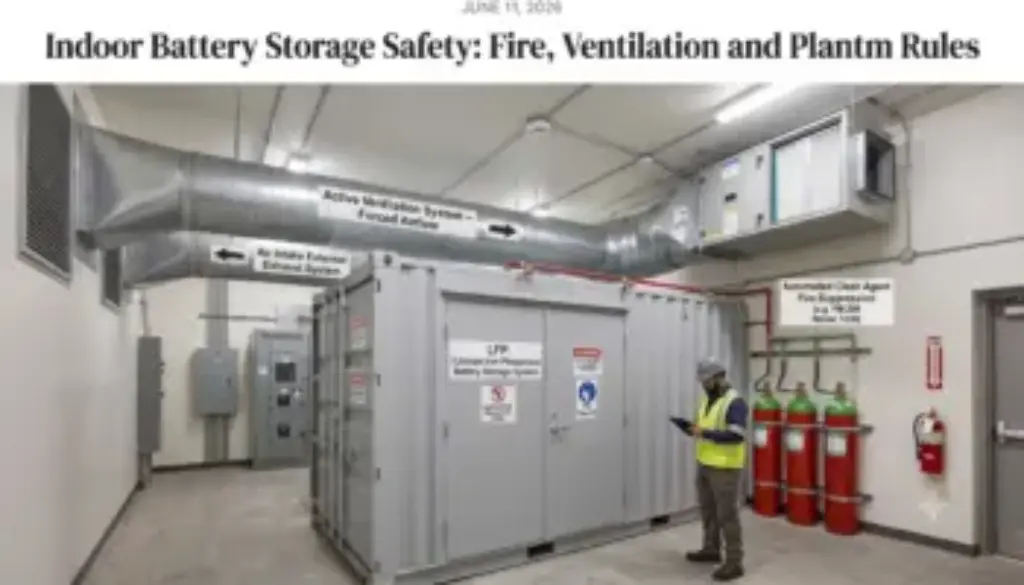
- Suppression. Built-in fire suppression designed to act within the enclosure itself rather than relying solely on the building’s systems.
- Cell-level isolation. A fault in one module is contained rather than allowed to cascade across the system.
These work together so that the rare fault is caught and contained, not left to spread.
Ventilation, cooling and heat management indoors
Batteries work best within a temperature band, and managing heat is part of keeping them safe and long-lived. Indoor systems include cooling to hold the cells in their ideal range, and the plant room needs adequate ventilation to remove heat and allow the system to breathe. The exact requirement depends on the size of the system and the room, which is one of the things a site survey confirms. It is rarely onerous, but it is not something to guess at.
Siting an indoor system: plant rooms, bays and floor loading
An indoor system is designed for clean internal spaces such as plant rooms, spare bays and internal enclosures. Three practical points decide whether a space will work.
- Footprint. A modular rack is compact. A 109 kWh rack needs roughly the footprint of a single phone box, and capacity scales by bolting racks together.
- Floor loading. The racks are heavy, so the floor needs to take the weight. This is checked during the survey.
- Access and compartmentation. The system needs safe access for installation and maintenance, and siting takes account of fire compartmentation within the building.
Indoor systems carry an IP20 enclosure rating, which is appropriate for a clean indoor environment rather than the weatherproofing an outdoor unit needs.
Standards and certification to look for
Certification is how you prove a system is safe without taking anyone’s word for it. The Pramac range carries the certifications UK specifiers look for:
- IEC 62619 for industrial battery safety
- UL 1973 for stationary storage batteries
- UL 9540A for fire propagation testing
- VDE 2510-50 for stationary storage systems
- CE and UKCA marking
Ask any supplier for these. A system that carries them has been tested against recognised safety and fire standards.
Frequently asked questions
Is it safe to put a battery inside my building? Yes, when it uses stable LFP chemistry, carries the right certifications and is sited and ventilated correctly. These are the conditions a survey confirms.
What stops thermal runaway? LFP chemistry is highly resistant to it, and the battery management system isolates any cell that steps out of range. Detection and suppression provide further layers.
What fire protection is built in? A battery management system, smoke, heat and gas detection, built-in suppression within the enclosure, and cell-level isolation to stop a fault spreading.
How much ventilation does an indoor system need? Enough to remove heat and let the system breathe. The exact figure depends on the system and the room and is set during the survey.
What certifications prove it is safe? Look for IEC 62619, UL 1973, UL 9540A and VDE 2510-50, plus CE and UKCA marking.
How much space and floor strength does a rack need? A 109 kWh rack needs around a phone box footprint, with capacity added by bolting racks together. Floor loading is confirmed in the survey.
Thinking about an indoor system? Generator Pro surveys the space, the ventilation and the floor loading before anything is specified. See the Pramac indoor battery storage range or read our overview of what a BESS is and how it works.